🐣 Luna, Max & Nico and the Two Ways of Easter 🐣
The bells of Nerja rang softly across the morning sky, and Luna adjusted the pink flower clip in her dark hair as she looked out over the Balcón de Europa.
“It feels important today,” Max said, standing beside her, Nico’s blue bandana fluttering in the breeze.
“It is,” Luna smiled. “It’s Semana Santa. Easter week in Spain.”
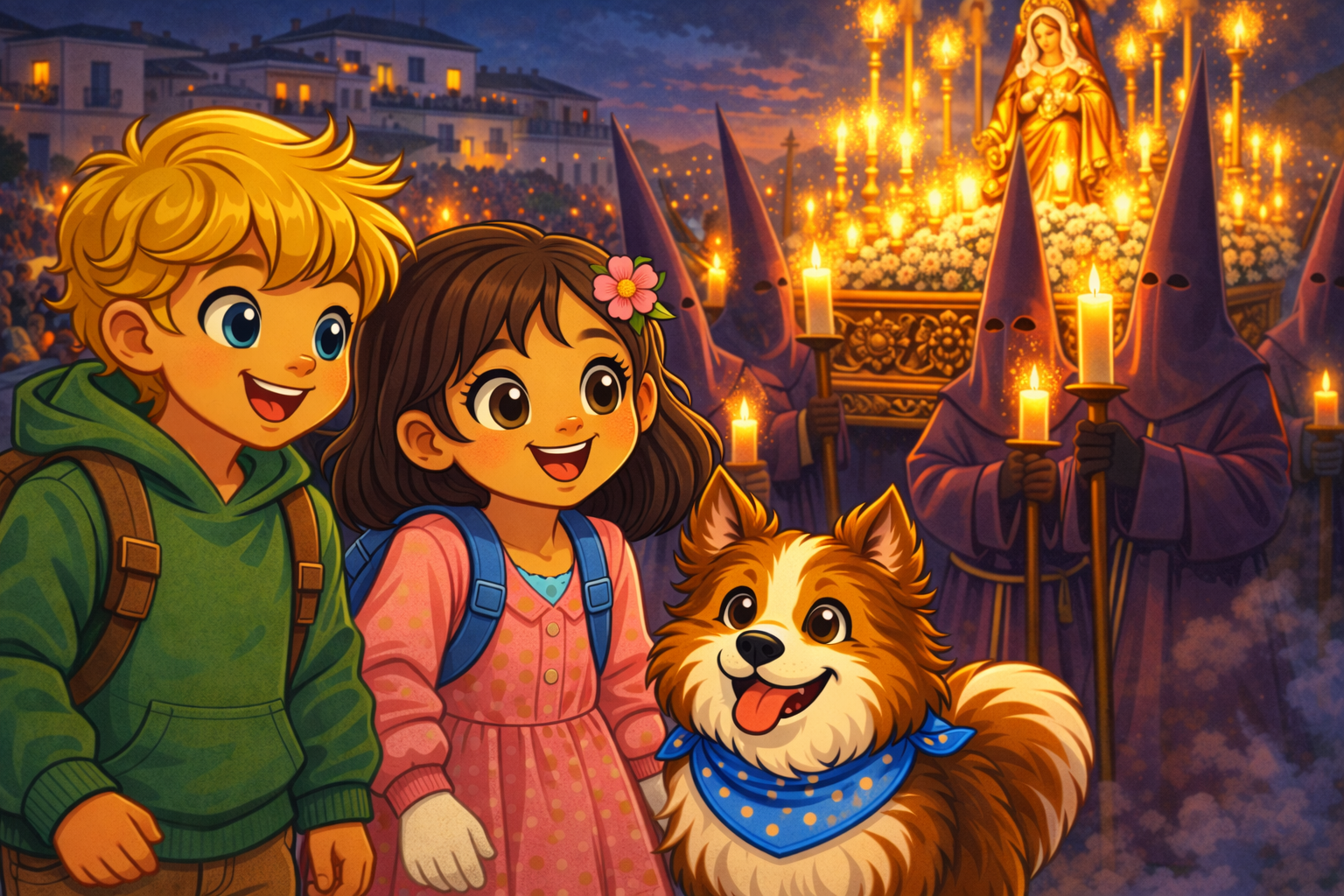
That evening, Luna’s parents took them into the old town. The streets were glowing in golden candlelight. The air smelled of incense and orange blossom. Drums echoed slowly through the narrow streets.
Boom… boom… boom.
The procession appeared, moving carefully and silently. Men and women in long robes walked with tall pointed hoods, only their eyes visible. Behind them came the great wooden paso, covered in flowers and candles, carried by hidden costaleros beneath.
Max watched quietly.
“Why can we only see their eyes?” he whispered.
“That’s called a capirote,” Luna explained softly. “They cover their faces because it’s not about showing who they are. It’s about humility. Everyone is equal when they walk. Only the eyes are visible, so they can reflect inside.”
Max nodded slowly. It felt serious. Calm. Almost magical.
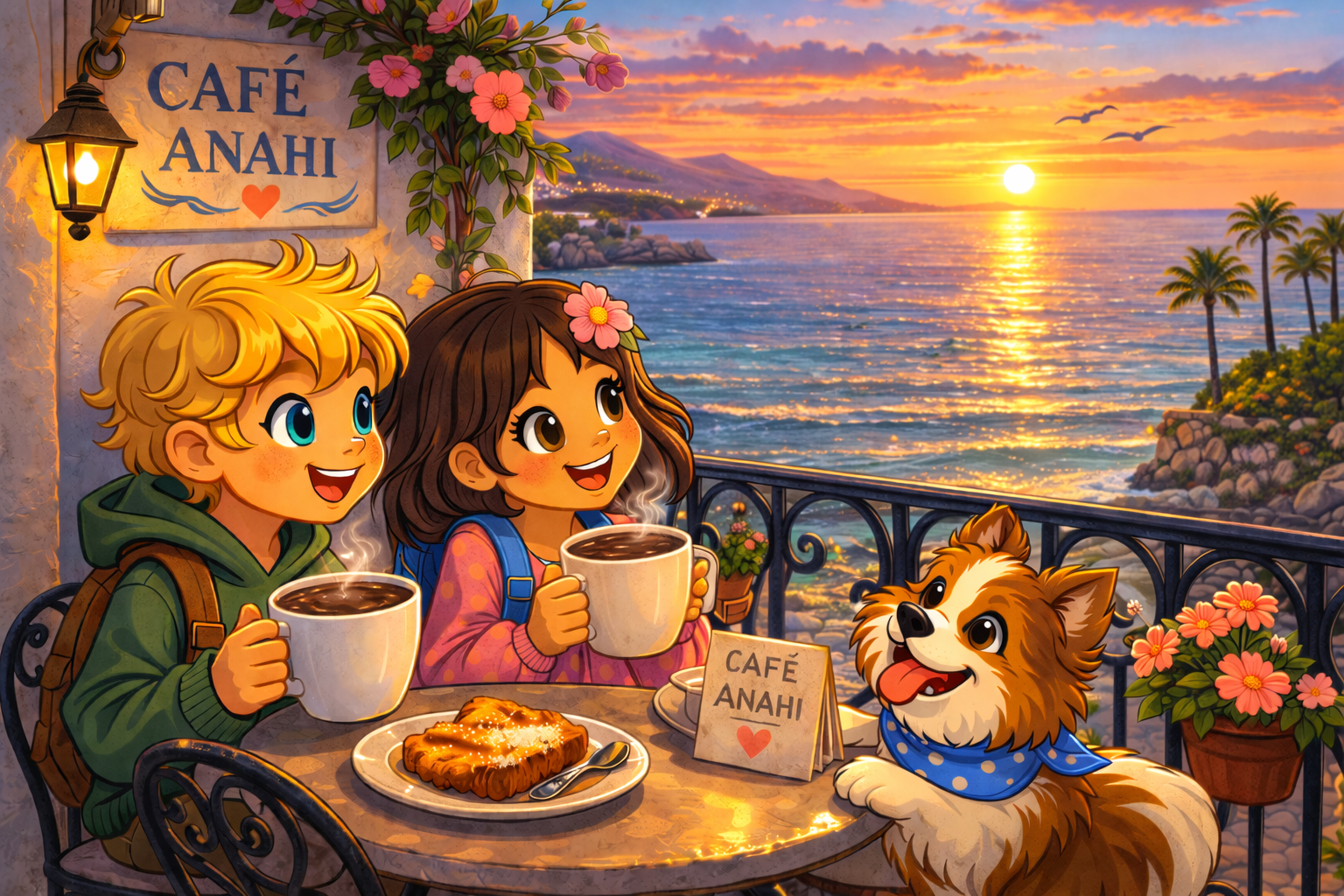
After the procession, Luna’s parents took them to a small café near the church. They shared warm torrijas drizzled with honey and thick Spanish hot chocolate — so thick Max had to use a spoon.
“This is Easter in Spain,” Luna said gently. “It’s about remembering, walking together, and being grateful.”
The next morning, the mood felt lighter. The sun sparkled over the Mediterranean, and the sea was calm and blue.
“Now,” Max grinned mysteriously, “it’s time for my Easter surprise.”
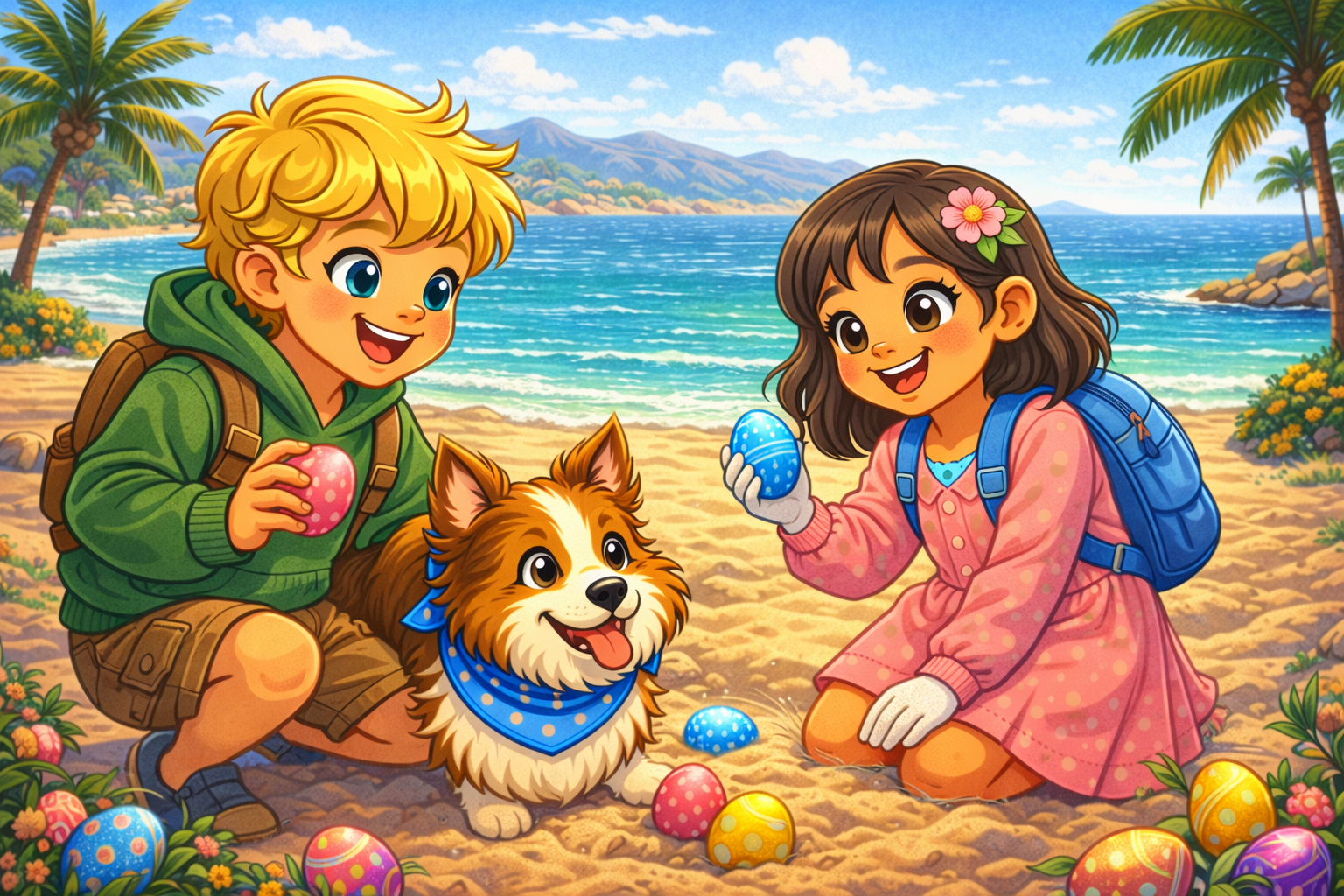
They ran down to the beach. Nico raced ahead, ears bouncing. Max pointed toward the sand dunes near the palm trees.
“I hid something last night.”
Luna gasped. “Chocolate eggs!”
They searched behind rocks, under driftwood, near beach plants. Nico dug enthusiastically, accidentally uncovering two at once.
“In Northern Europe,” Max explained proudly, “we celebrate Easter a little differently. After winter, we celebrate that the light is coming back. We decorate eggs in bright colours. Sometimes there’s an Easter bunny who hides chocolate. And children search for them.”
“That’s so cheerful,” Luna laughed.
“It is! But first,” Max said thoughtfully, “I love celebrating the Spanish way with your family. Watching the procession. Eating the special food. Drinking hot chocolate. It feels deep.”
“And then,” Luna smiled, “we celebrate your way.”
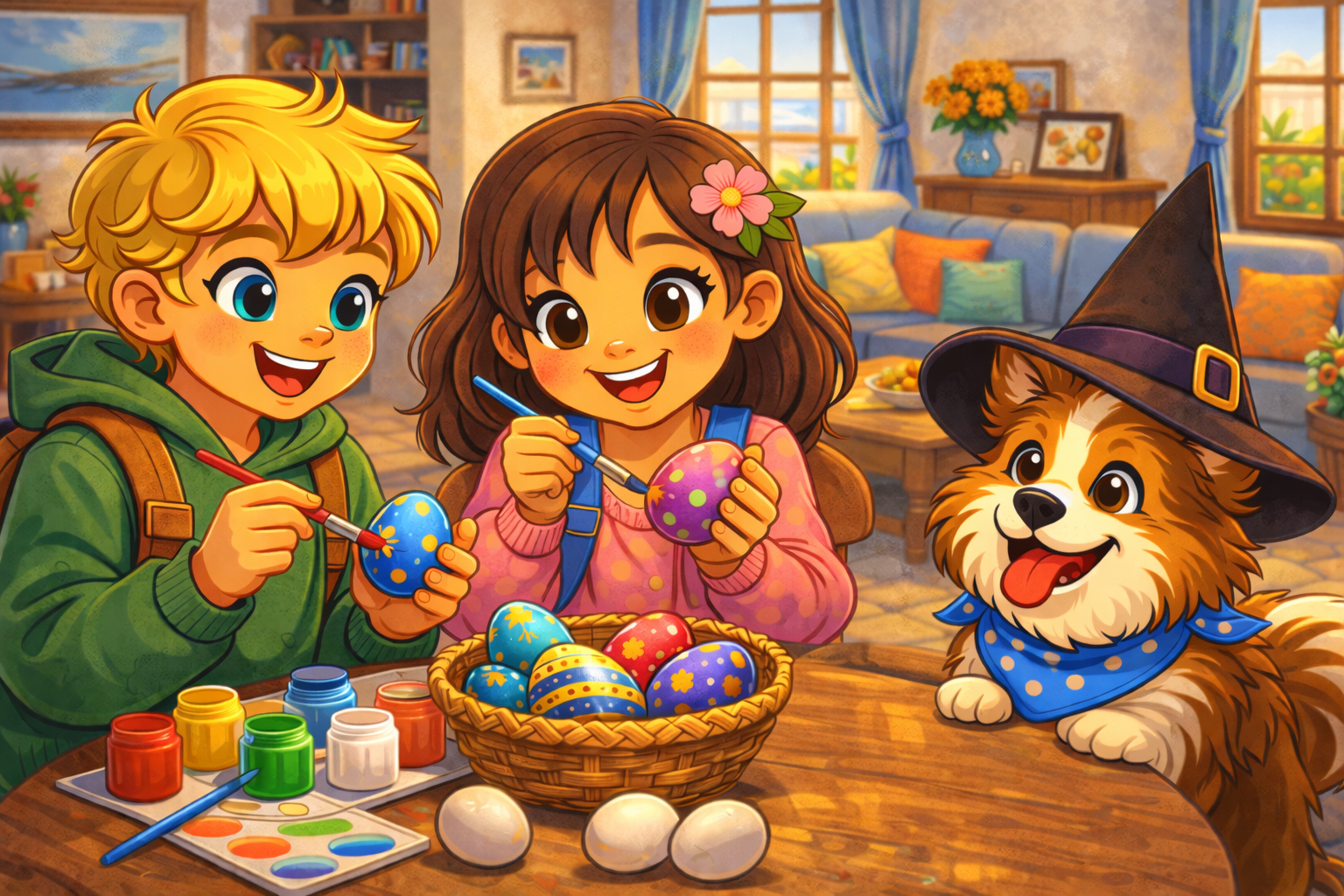
That afternoon, they went to Max’s home. On the kitchen table lay bowls of paint, little brushes and hard-boiled eggs.
“We paint them,” Max explained. “In some countries, some children even dress up like little Easter witches and bring drawings to neighbours.”
Luna’s eyes sparkled. “We should dress up Nico.”
Moments later, Nico stood proudly in the garden wearing a tiny homemade witch hat that kept slipping over one eye.
“You are the friendliest Easter witch ever,” Luna declared.
They painted eggs in blues and yellows, little flowers, tiny suns and waves. Some had Spanish crosses and candles. Others had northern stars and bunnies.
Two traditions. One table.
As the sun began to set, they placed their painted eggs beside the window. The Mediterranean shimmered in the distance.
“Spanish Easter remembers something important,” Luna said quietly.
“Northern Easter celebrates light coming back,” Max added.
“And both,” Luna finished, “are about hope.”
Nico barked softly, as if agreeing.
That evening, as golden light filled the sky over Nerja, the three friends understood something beautiful:
Easter can look different in different places.
But it always carries the same promise.
After darkness, there is light.
After winter, there is spring.
Mindful Mini-Lesson
Easter teaches us that differences are beautiful.
We can honour quiet candlelight and joyful egg hunts.
We can remember and celebrate at the same time.
And just like spring, we can always begin again.