The History of Semana Santa - and the Story of San Francisco
Semana Santa in Spain is more than a religious celebration. It is history carried through the streets. It is memory, devotion, identity — expressed not in words, but in silence, music and movement.
Holy Week commemorates the final days of Jesus Christ’s life: from Palm Sunday and his arrival in Jerusalem, through the Last Supper on Holy Thursday, the Crucifixion on Good Friday, and finally the Resurrection on Easter Sunday. These events form the heart of Christian belief, and in Spain they are remembered not quietly, but collectively.
The origins of Semana Santa processions date back to the Middle Ages. From the 14th and 15th centuries onward, religious brotherhoods — known as cofradías or hermandades ( brotherhoods) — began organising public acts of penance. Many people at that time could not read, so faith was expressed visually. Sculpted images of Christ and the Virgin Mary were carried through towns so that everyone could see, reflect and feel part of the story.
Over time, these processions became more elaborate. Large wooden platforms called pasos were created, often bearing life-sized sculptures that depict scenes from the Passion. These figures are not theatrical props — they are sacred works of art, some centuries old, lovingly preserved and deeply revered.
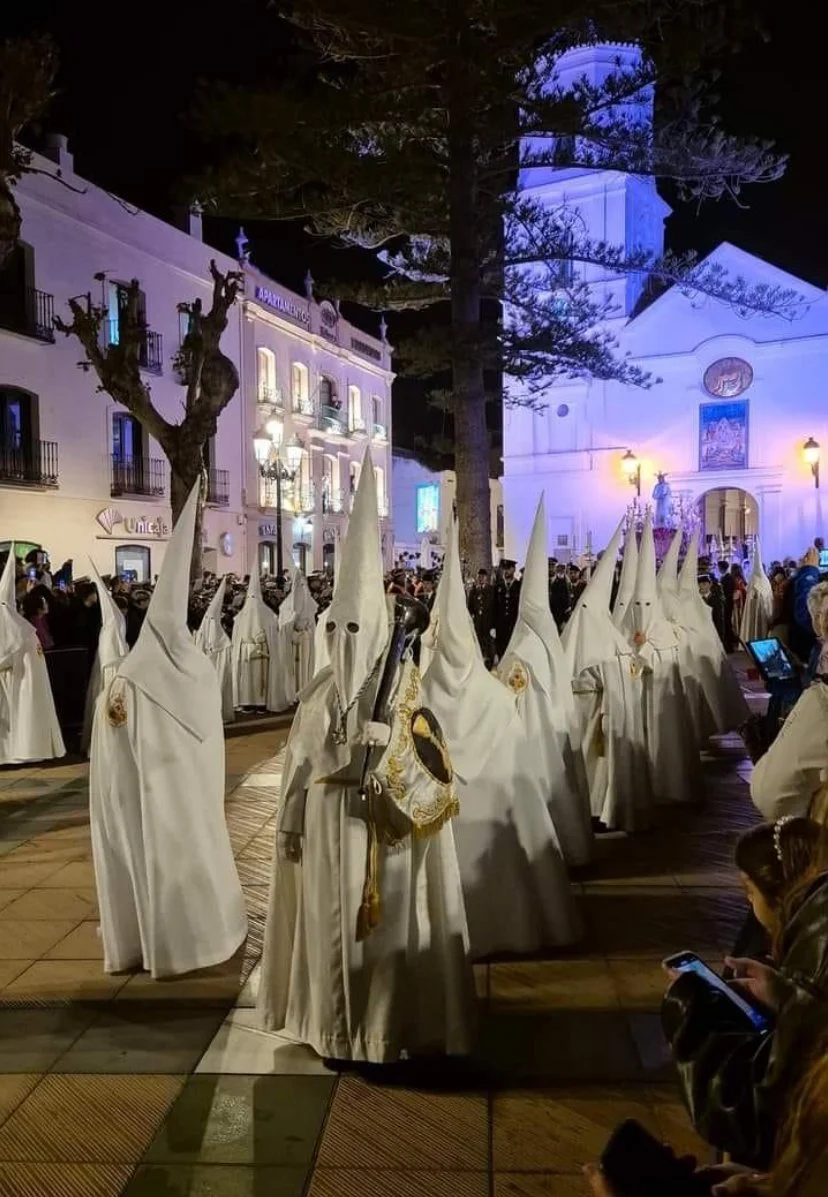
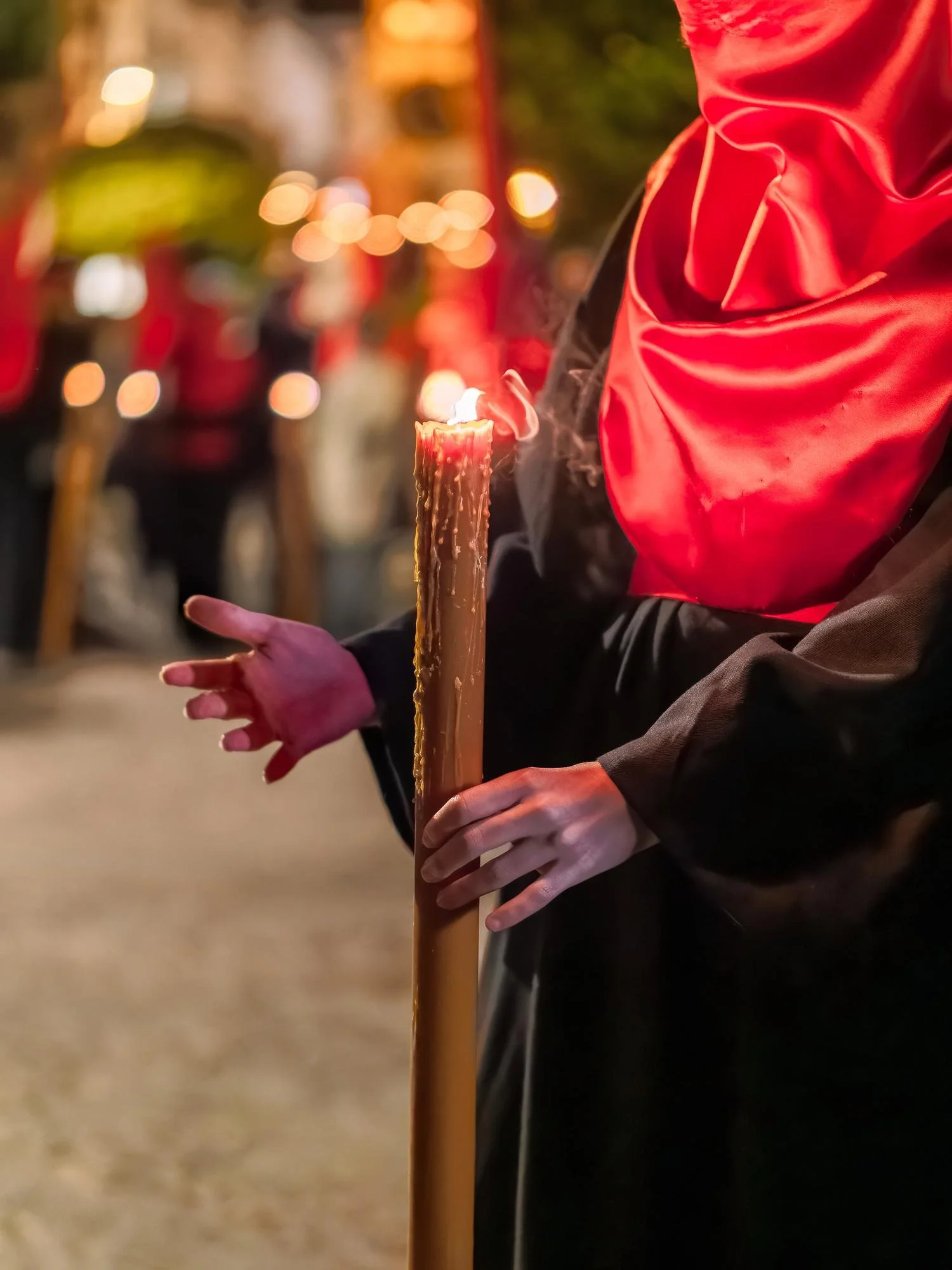
In Andalucía, Semana Santa developed its own distinct character. The atmosphere here is emotional, intense and intimate. Drums echo through narrow streets. Incense drifts into the night air. The costaleros, hidden beneath the pasos, carry enormous weight on their shoulders as acts of devotion. Nazarenos - the penitents , dressed in long robes and tall pointed hoods, walk slowly in silence, symbolising humility and repentance.
The tall hood is called a capirote, and it has deep historical meaning. Its pointed shape represents repentance and the desire to rise closer to God. The face is covered so that only the eyes are visible — not to create mystery, but to ensure anonymity. In Semana Santa, the act of penance is not about the individual being seen or recognised. It is about humility. By covering their faces, participants remove personal identity, social status and ego. What remains is devotion alone. The visible eyes serve as a reminder of reflection and introspection — a quiet focus inward rather than outward.
For international visitors unfamiliar with the tradition, it is important to understand that the capirote dates back many centuries and is entirely rooted in Catholic penitential practice. It predates any modern associations and carries no political meaning within the context of Semana Santa.
And then there is the influence of San Francisco.
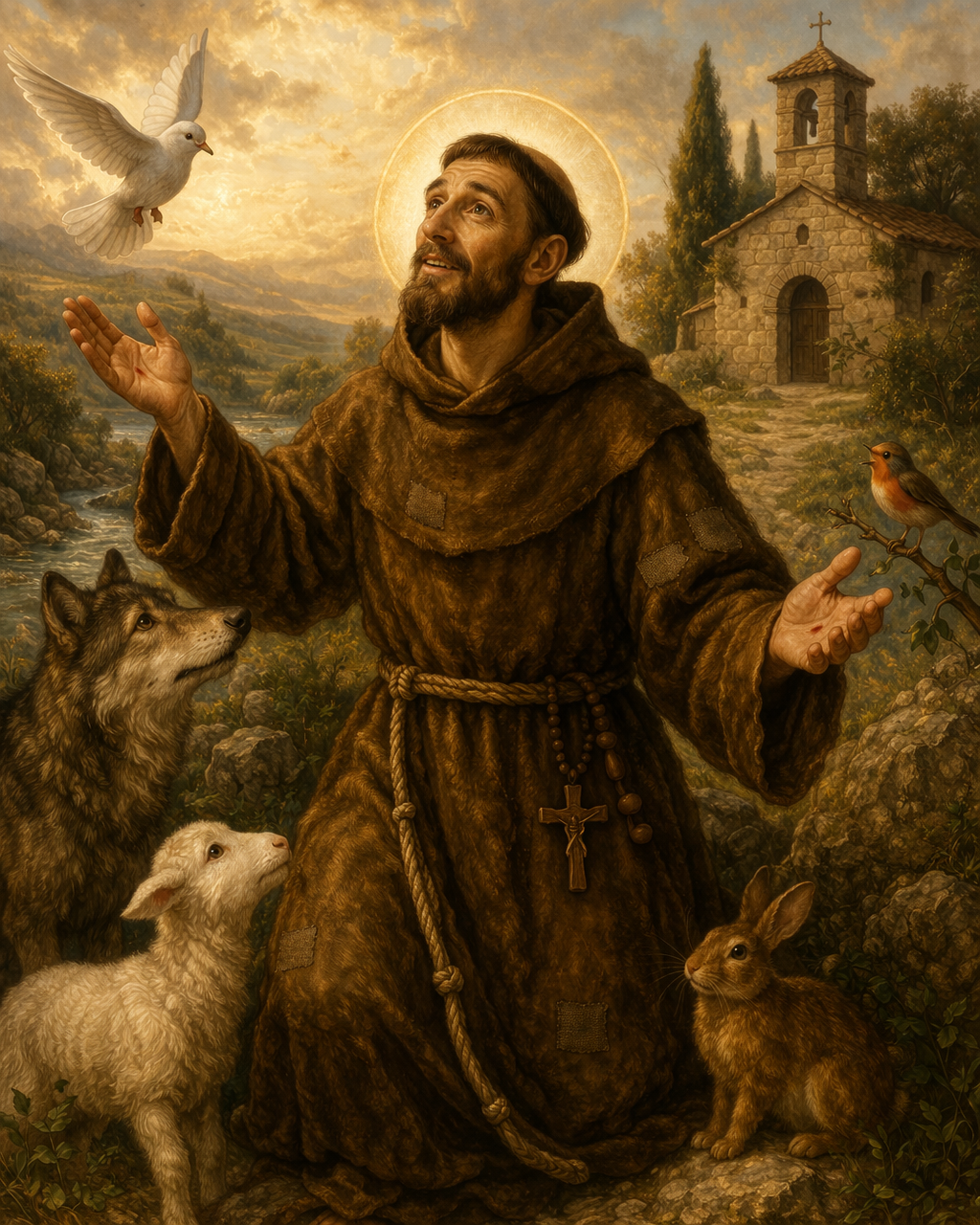
Saint Francis of Assisi, who lived in the 12th and 13th centuries, played a profound role in shaping how Christians related to the Passion of Christ. Francis emphasised simplicity, humility and deep emotional connection to Christ’s suffering. He encouraged people not just to understand the story intellectually, but to feel it - to meditate on the humanity of Jesus, his pain and sacrifice.
This Franciscan spirituality spread across Europe, including Spain. It inspired a more vivid, human portrayal of Christ in religious art. Instead of distant or symbolic images, artists began creating deeply expressive sculptures showing sorrow, tenderness and suffering. This emotional realism became central to Semana Santa imagery.
Many of the brotherhoods that organise Holy Week processions were influenced by Franciscan spirituality. The idea of walking in humility, carrying weight as penance, and publicly expressing devotion reflects this tradition.
In towns like Nerja, the processions may be smaller than those in cities like Seville or Málaga, but the meaning remains the same. They are not performances staged for visitors. They are living traditions, passed from generation to generation. Families belong to the same brotherhoods for decades. Children grow up watching their parents walk. The rhythm of Holy Week becomes part of local identity.
Semana Santa survives not because it is old, but because it is lived. That is Semana Santa.