Sayalonga - Templar Tales, the “Narrowest” Alley and a Meat Lover’s Lunch
Sayalonga doesn’t introduce itself with big drama. It draws you in quietly - with its hillside lanes, its deep-rooted traditions, and that feeling that the village has been here a very long time, watching the seasons turn. About 25 km from Nerja - 30 minute drive in a car.
This is a place shaped by the old agricultural rhythm of the Axarquía: vines on steep slopes, family plots, harvest stories, and part of the Sun and Wine Route. It’s not just scenery - it’s heritage.
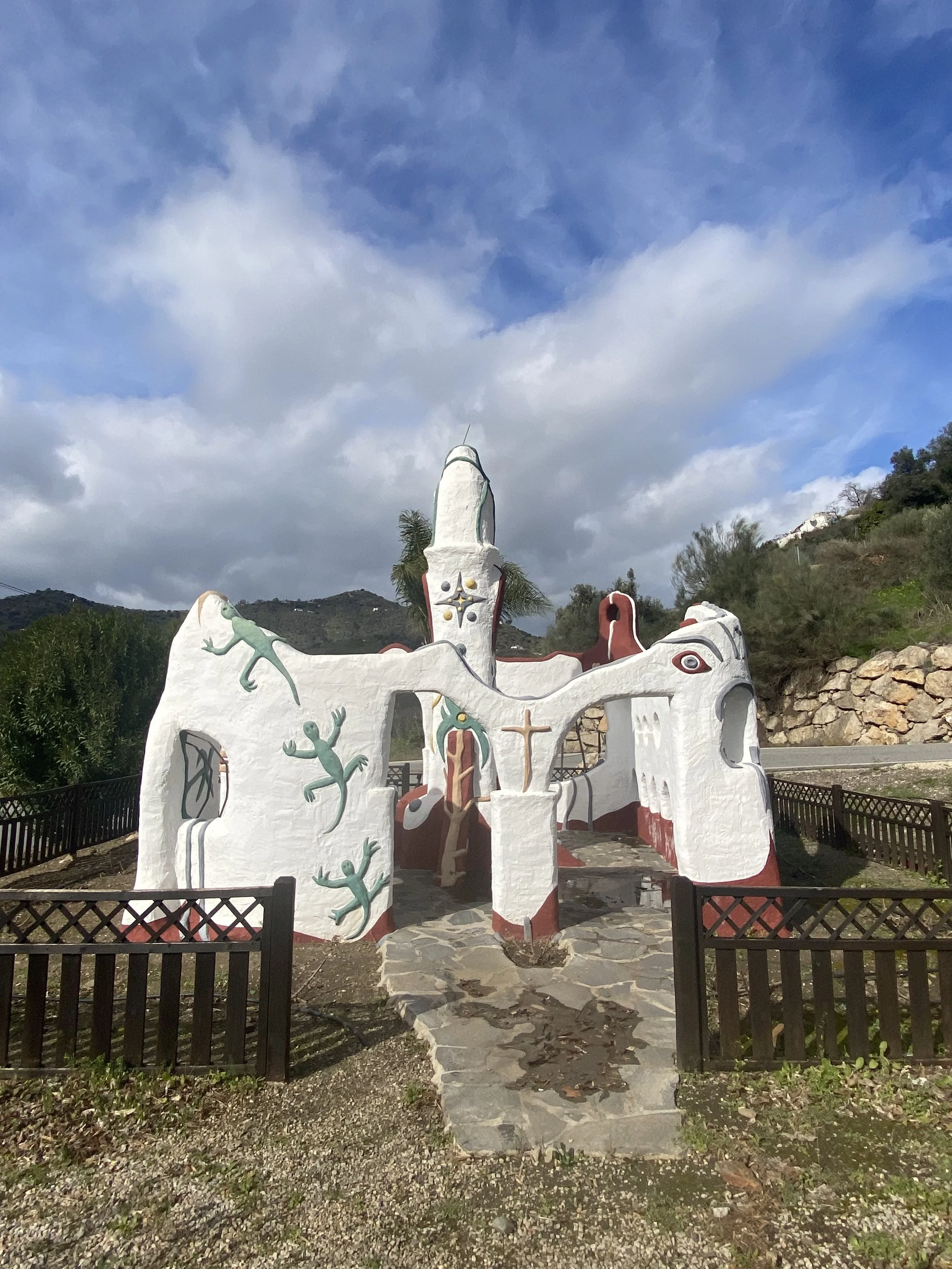
Before you arrive to the village, you may notice the Peace Monument on the A- 7206 coming from Algarrobo direction. Be careful where to park as its just by a bend. A sculpture described as referencing victims of the Spanish Civil War (1936–1939). It’s a reminder that villages like Sayalonga don’t only hold ancient history. They also carry the more recent, human stories of Spain.
What surprises many visitors is that Sayalonga’s story doesn’t begin only with Al-Andalus. The village name itself is often described as a Roman legacy, from the Latin saya-longa meaning “long tunic,” a detail that even appears on the town’s coat of arms.
From there, the layers continue.
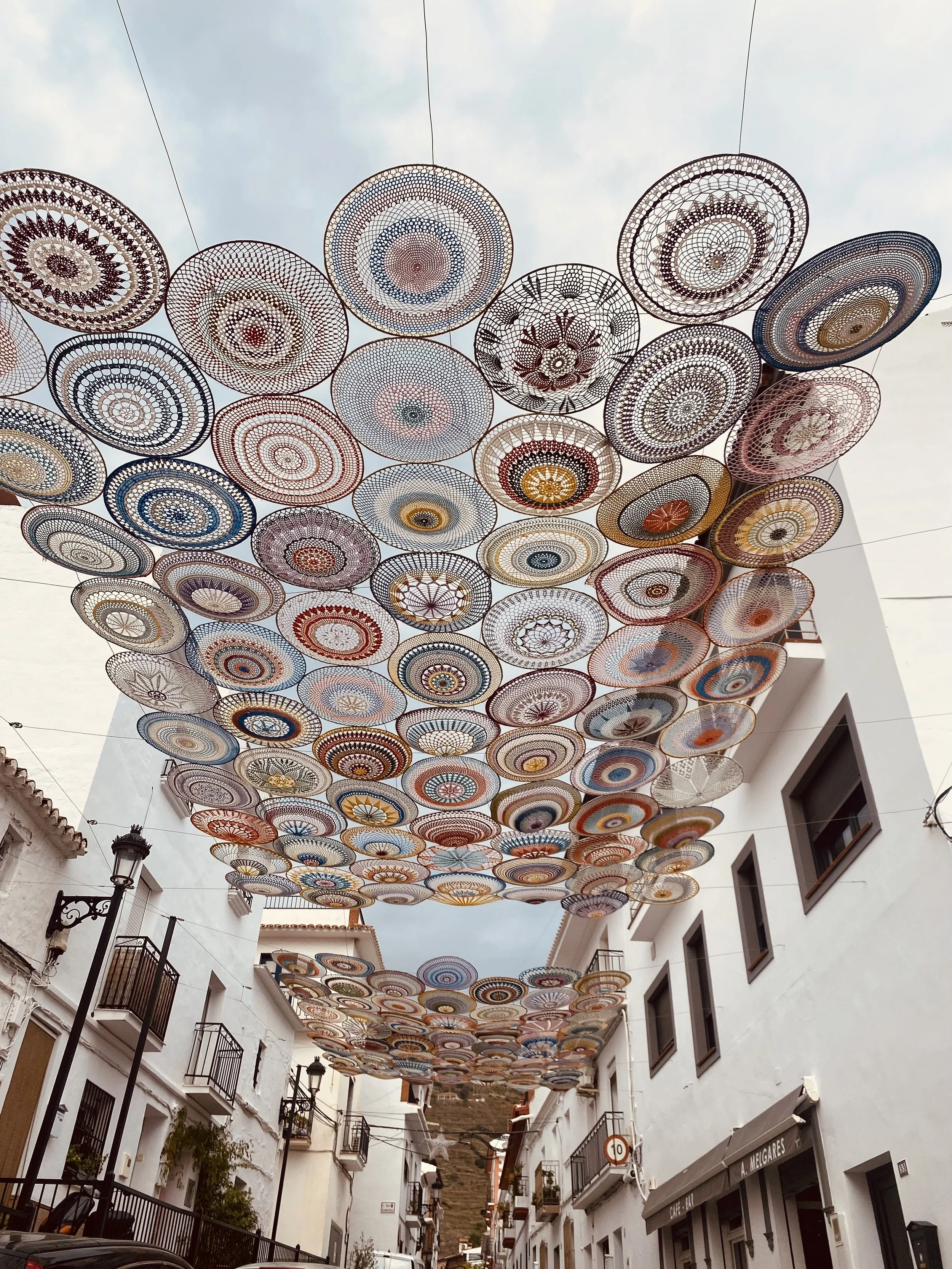
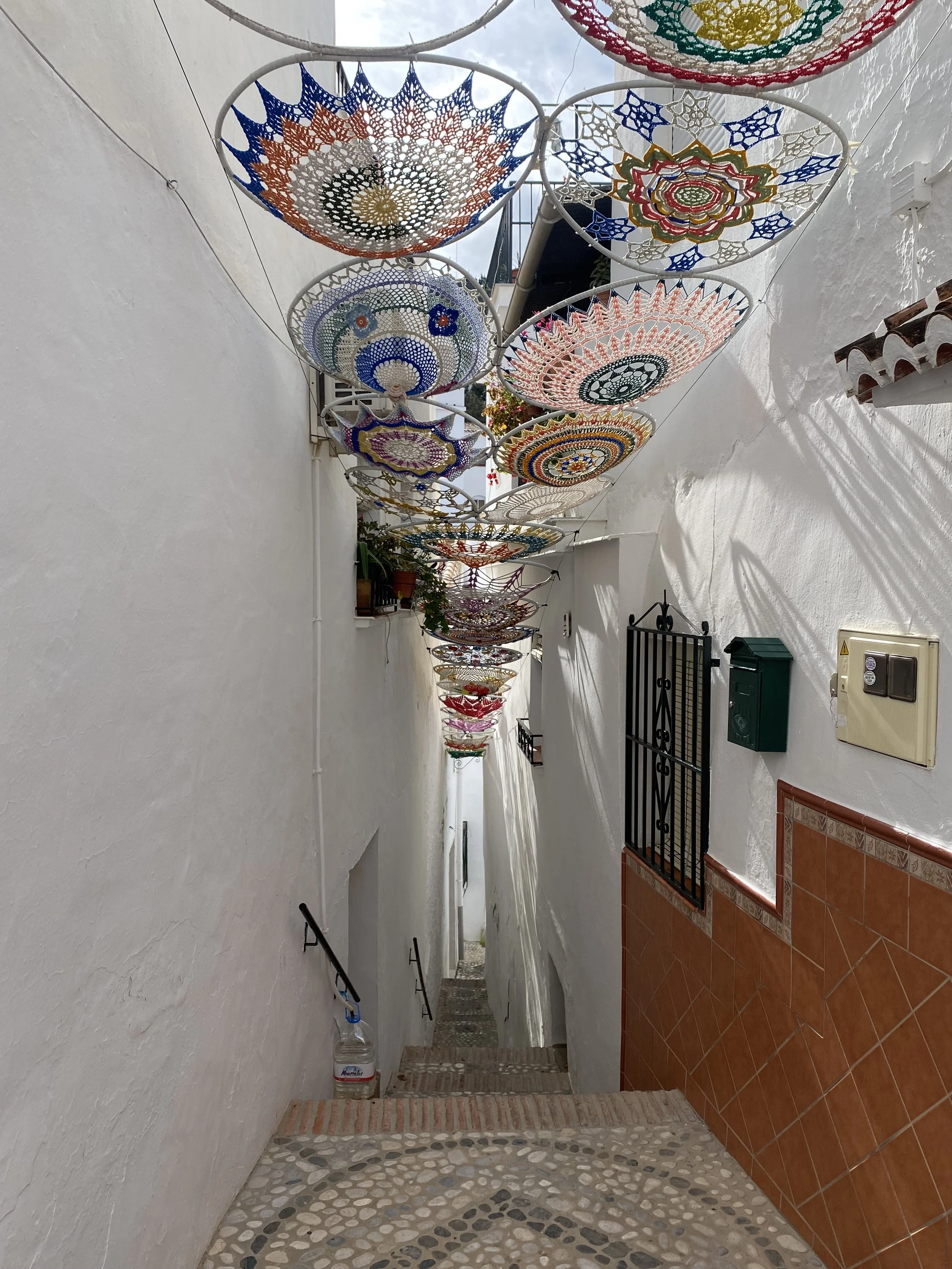
As you wander into the centre, you’ll notice how the village seems designed for walking - tight turns, lanes that narrow without warning, little stairways, and shaded corners that feel like secrets. This street pattern is one of those quiet echoes of Andalusia’s past: the kind of layout that made sense in hot climates and close-knit communities.
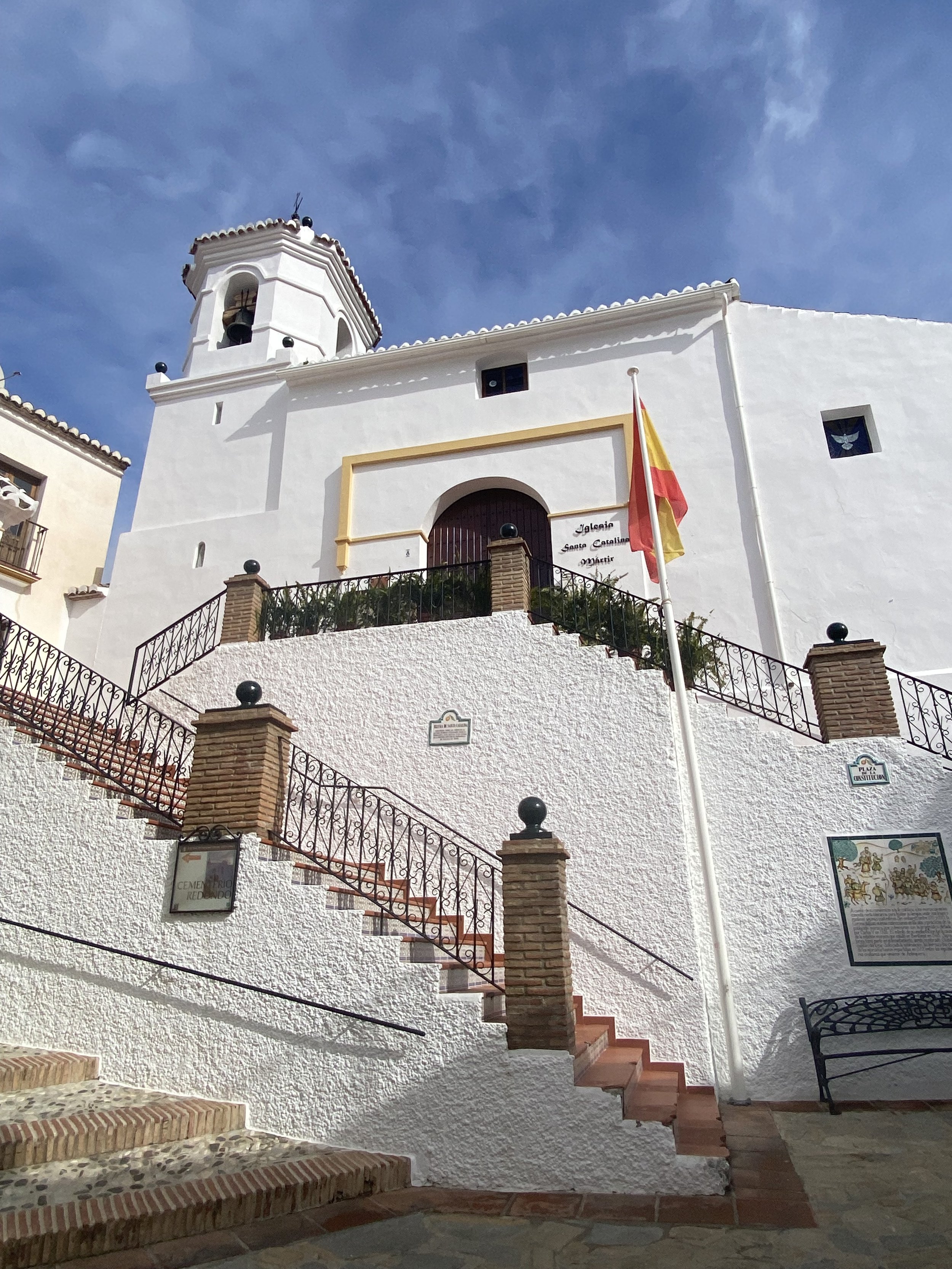
At the heart of the village stands Iglesia de Santa Catalina, described as a Mudejar-style church built over what was once the village mosque. Nearby you’ll also find the Hermitage of San Cayetano, and together these landmarks give Sayalonga a calm, grounded centre, a place that feels lived-in rather than staged.
Then comes the moment that makes everyone smile.
Just beside the church is Callejón de la Alcuza, often called the narrowest alley in the whole Axarquía, famously around 56 cm wide. It’s the kind of spot that makes you laugh, shuffle sideways, and instantly understand why Sayalonga is so memorable. You can’t help but imagine the generations who passed through here long before it became a “photo moment.”
To add context to everything you’ve just seen, the Museo Morisco is well worth a stop. It connects the village to the wider Moorish story of the region, a history that still shapes the Axarquía in subtle ways, from village layouts to cultural identity. It’s a small place, but it deepens the whole visit.
And then there is the place that people talk about long after they’ve left.
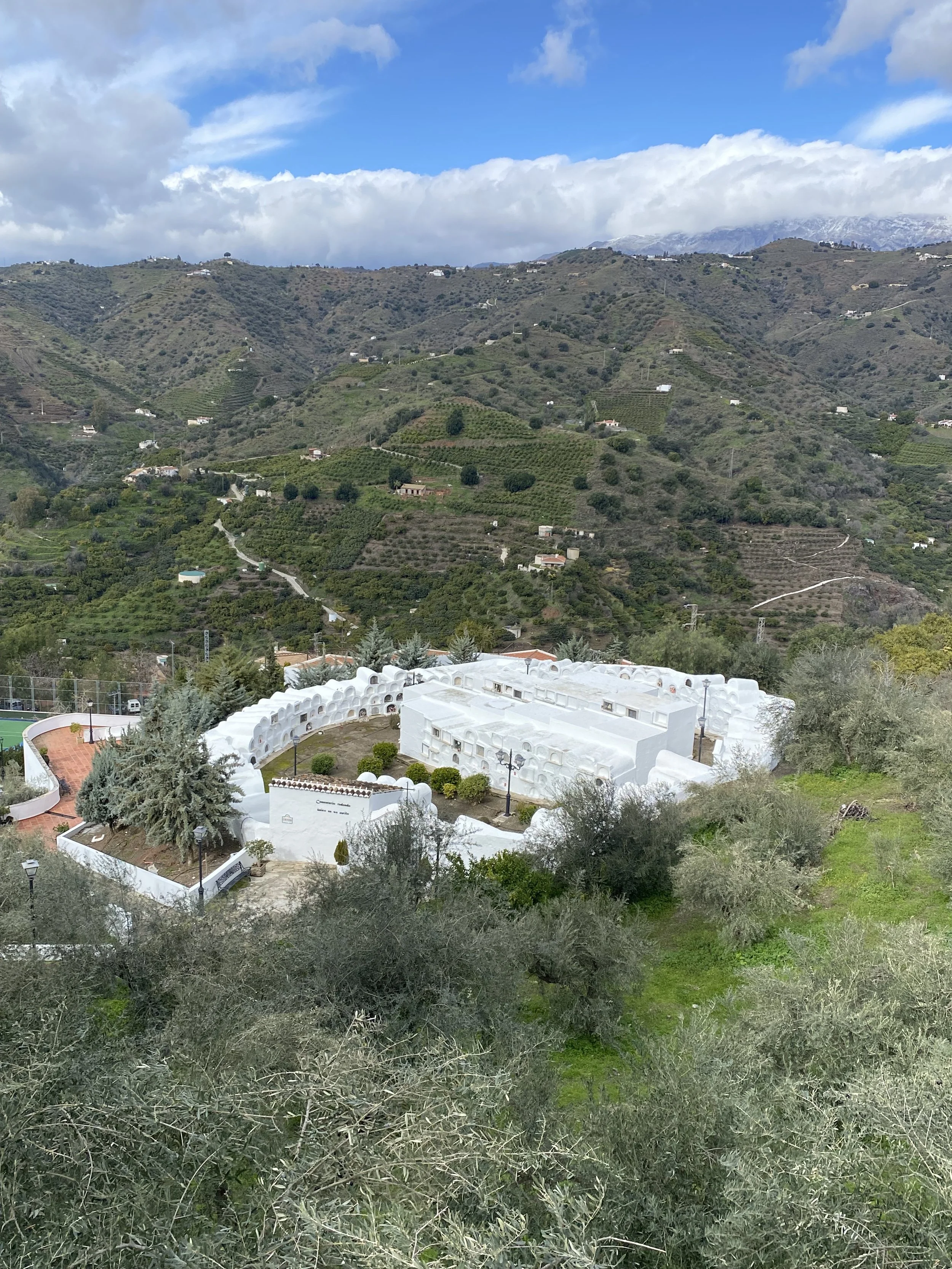
Sayalonga’s cemetery is described as round and unique in Spain, and its unusual form has sparked plenty of local fascination. Over the years, legends have grown around it, including stories linking it to the Templars and even Masonic origins, while another interpretation is simply poetic: that the circular design was created so that, in death, no one would “turn their back” on another. Whether you believe the legends or not, it’s an unforgettable place to visit: peaceful, strange in the best way, and quietly moving.
By the time you’ve wandered, learned, and taken it all in, there’s only one correct way to end a Sayalonga visit: Long Spanish lunch.
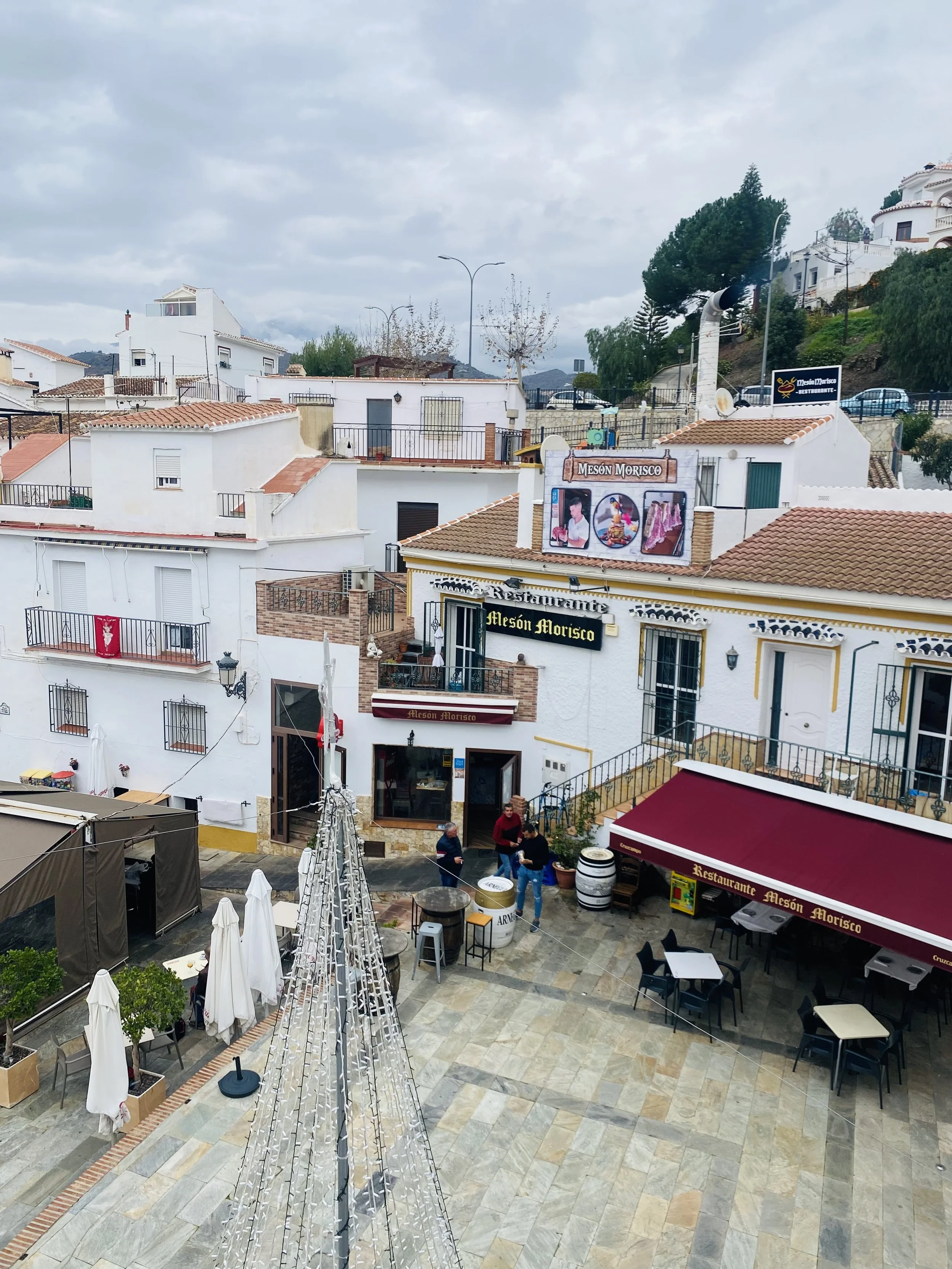
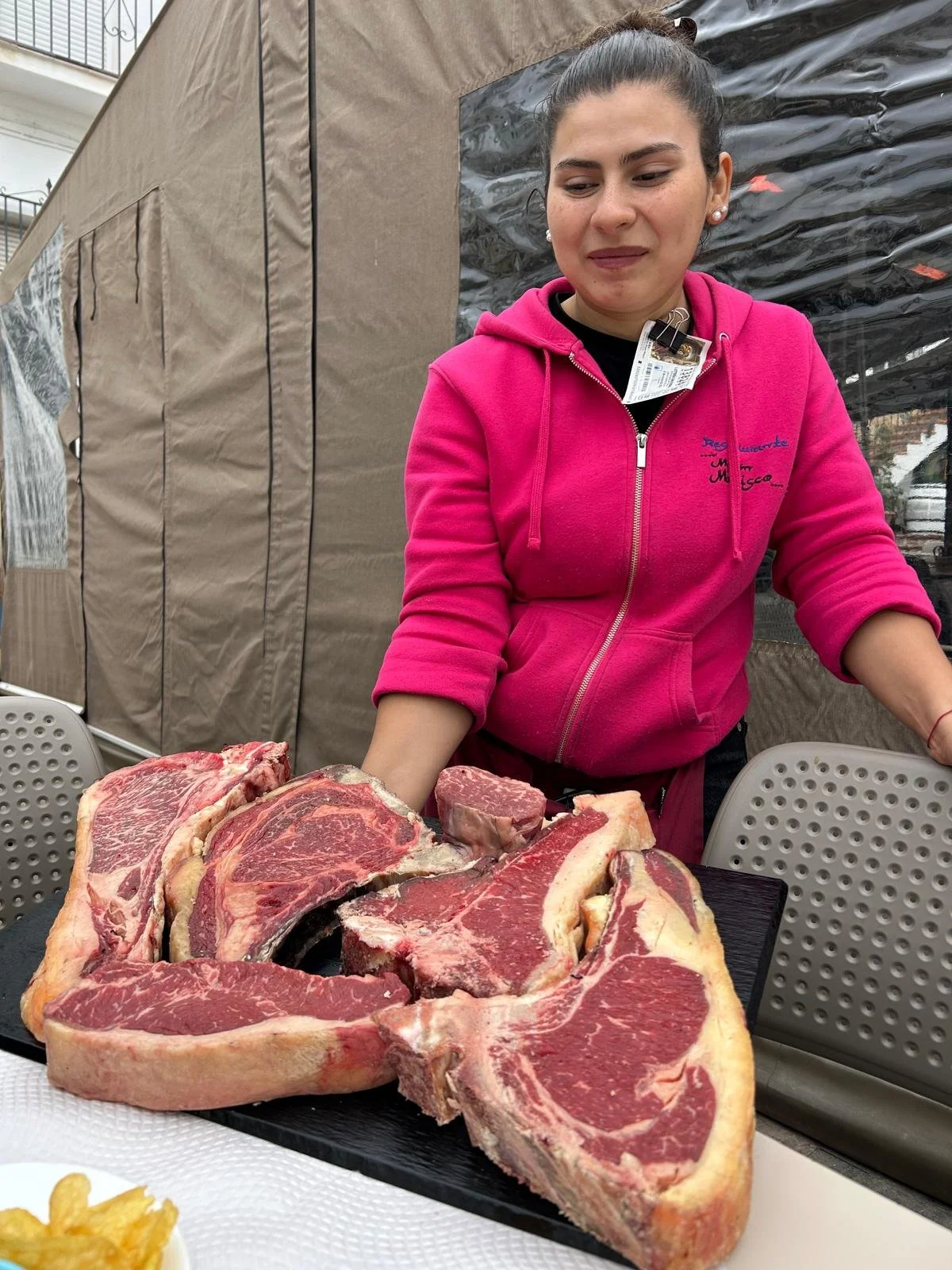
Mesón Morisco is the kind of local favourite that makes the tour a proper day out - especially if you love a serious meat selection and that long, Andalusian style of eating where nobody is in a hurry. The meat selection is just the biggest we´ve seen around here, comes in so many ways, portions are big and prices very good for such banquet! Plenty for none meat eaters too, great selection of local dishes and our favorite patatas pobles in so many ways.
It’s the perfect finish to a village that rewards you for slowing down. This is a very popular place for locals and visitors alike. There is plenty of outdoor space but if you plan to visit during winter, ensure you pre-book as inside is always full (especially weekends), and most likely outside too in the summer- so PREBOOK!
Sayalonga, in the end, feels like a small chapter of the Axarquía that contains an entire book: raisin-route heritage, Roman echoes, Moorish memory, and a cemetery wrapped in legend, all tied together by the simple pleasure of wandering and staying for lunch.