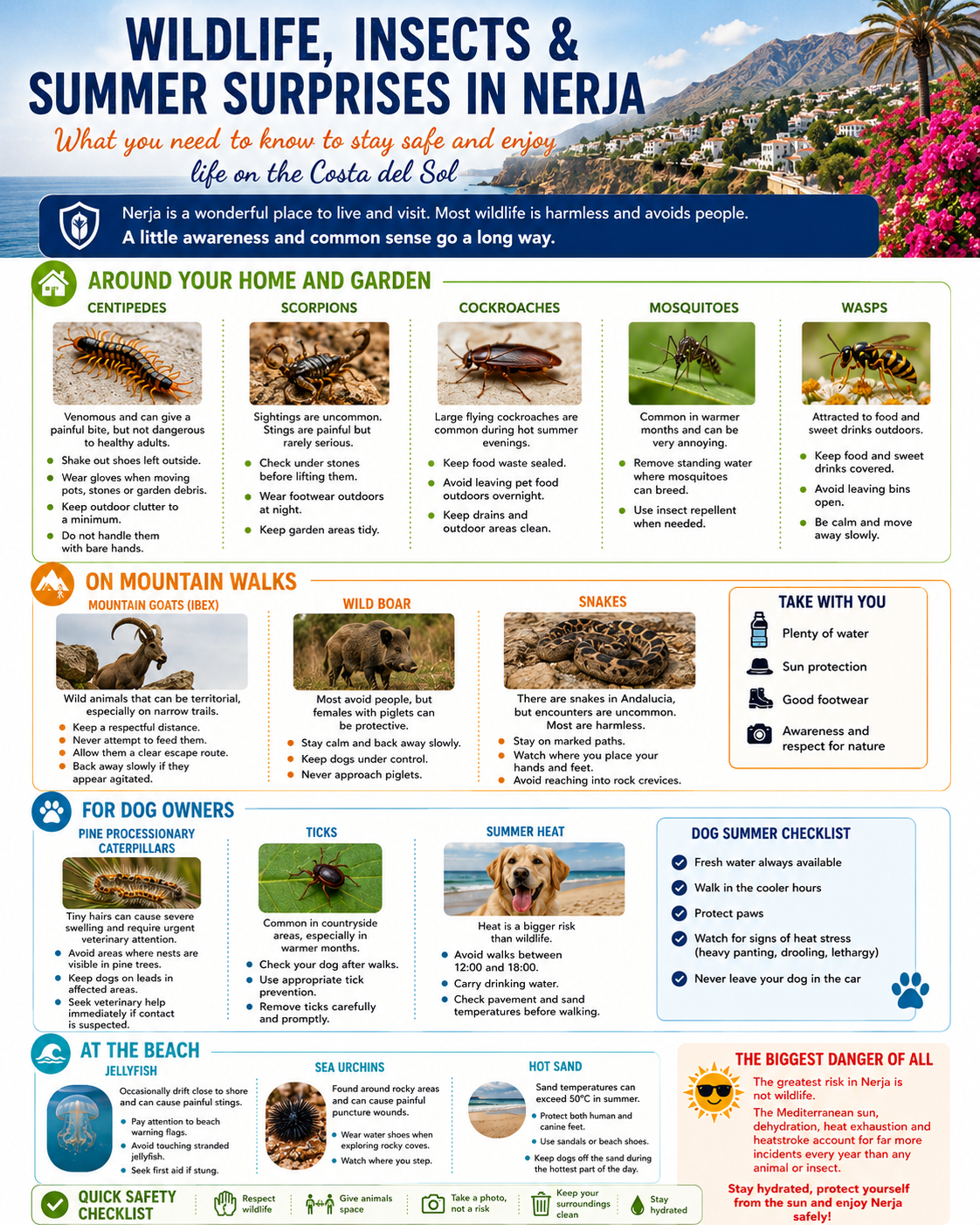
Nerja Wildlife, Insects and Other Summer Surprises
Most people come to Nerja for the sunshine, beaches, mountain walks and relaxed outdoor lifestyle. Alongside all that natural beauty comes a variety of wildlife, insects and seasonal hazards that may be unfamiliar to some visitors and new residents.
The Costa del Sol is a very safe place to live and visit, and encounters with wildlife are usually rare and harmless. However, knowing what you might come across and how to react can help you make the most of your time outdoors, whether you're here on holiday or call Nerja home.
A healthy natural environment is usually a sign of a healthy ecosystem, and the presence of wildlife, insects and marine life is part of what makes the landscapes around Nerja so rich and diverse.
The good news? Most situations can be managed easily with a little awareness and common sense.
Around Your Home and Garden
The warm Mediterranean climate that makes Nerja so attractive is also enjoyed by a variety of insects and small creatures. Most are harmless and simply part of life in southern Spain, but it is useful to know what you may occasionally come across.
Centipedes
Large Mediterranean centipedes can occasionally be found in gardens, beneath plant pots, around stone walls and sometimes even in swimming pools. They often end up in pools accidentally after falling in while searching for water, shelter or insects. Unable to climb the smooth pool walls, they usually drown.
Centipedes are venomous and use venom to subdue their prey. A bite can be extremely painful and may cause swelling, redness and a burning sensation, although it is rarely dangerous to healthy adults.
Scorpions
Scorpions do exist in Andalucía, although sightings are relatively uncommon. They tend to hide beneath rocks, in cracks and sheltered outdoor areas during the day.
Most species found in southern Spain are venomous, but their sting is usually comparable to a painful bee or wasp sting for healthy adults. After many years living in Andalucía, we have never personally encountered one.
Cockroaches
Cockroaches are a more common sight during hot summer evenings. The combination of warm temperatures, drainage systems and easy access to food means they thrive in southern Spain and often seem to appear in greater numbers during the summer months.
While unpleasant to many people, they are not venomous and generally pose more of a nuisance than a danger. If they visit you, simply buy a can of cockroach spray from the supermarket and, voilà, problem solved.
Mosquitoes, Tiger Mosquitoes and Wasps
Mosquitoes are common during the warmer months, particularly near water or gardens with irrigation. Their bites can cause itching and irritation.
Tiger mosquitoes are now established across much of Málaga province. They are smaller than many common mosquitoes and can be recognised by their black body with distinctive white stripes. Unlike many mosquitoes that are most active at night, tiger mosquitoes often bite during the day, particularly in the early morning and late afternoon.
Wasps are also common during summer and are attracted to food and sweet drinks. They are venomous and their stings can be painful, especially for people with allergies.
What To Do
• Remove standing water where mosquitoes can breed. This is one of the most effective preventative measures.
• Wear gloves when moving plant pots, stones or garden debris.
• Check under rocks, wood piles and outdoor furniture before lifting them.
• Wear footwear outdoors at night. If you leave shoes outdoors, always shake them before putting on. Preferably also on water shoes on the beach.
• Keep outdoor areas tidy and free from unnecessary clutter.
• Seal food waste and avoid leaving pet food outside overnight.
• Keep food and sweet drinks covered when eating outdoors.
• Never handle centipedes, scorpions or unfamiliar creatures with bare hands.
• If stung or bitten, clean the area and apply a cold pack.
Seek urgent medical help if swelling spreads rapidly, breathing becomes difficult or signs of an allergic reaction appear.
On Mountain Walks
The mountains surrounding Nerja are one of the area's greatest attractions. Most walks are completely uneventful, but there are a few wild animals worth knowing about.
Mountain Goats (Spanish Ibex)
The Spanish ibex is one of the most iconic sights in the mountains around Nerja. We have come across them many times on our walks and often stop to admire them as they navigate seemingly impossible cliffs and rocky terrain with ease.
Attacks are extremely rare. However, they are still wild animals and should always be treated with respect. On a few occasions, we have had to turn back and choose another route as the ibex made it very clear that they did not want us passing through what they considered their territory.
Wild Boar
Wild boar are occasionally spotted in the countryside and can sometimes venture closer to urban areas in search of food.
They generally avoid people but can become dangerous if cornered, startled or protecting young piglets.
We occasionally come across wild boar on mountain walks and they are also sometimes spotted around the beaches and natural areas of the Maro-Cerro Gordo Natural Park. Their population has increased in recent years and during the Covid lockdowns they even made headlines after being seen strolling around the Balcón de Europa and searching through bins for food.
Snakes
Encounters with snakes are uncommon and many species found in Andalucía are harmless.
Spain does have a small number of venomous snakes, although bites are very rare and most people will never encounter one. In fact, after many years of travelling throughout Andalucía and living here, we have never seen a snake in the wild.
What To Do
• Stay on marked paths whenever possible.
• Watch where you place your hands and feet.
• Avoid reaching into rock crevices, dense vegetation or under stones without looking first.
• Keep a respectful distance from all wildlife.
• Never feed wild animals.
• Allow animals a clear escape route.
• Back away slowly if an animal appears agitated.
• If an ibex blocks a path, do not attempt to push past it.
For Dog Owners
Summer can be particularly challenging for dogs in southern Spain.
Pine Processionary Caterpillars
These are one of the most dangerous wildlife hazards for dogs in Spain. Their tiny hairs contain toxins that can cause severe reactions if touched or inhaled.
Ticks
Ticks are very common in bushy areas, scrubland and overgrown vegetation around Nerja and the surrounding villages. Dogs can pick them up surprisingly easily during everyday walks, particularly if they enjoy exploring under bushes, long grass or along the edges of paths.
Ticks are not venomous but can occasionally transmit diseases to both animals and people.
Summer Heat
Heat poses a far greater risk to dogs than wildlife. Every summer, overheated pavements, hot sand and dehydration cause problems for pets across southern Spain.
What To Do
• Use tick prevention products recommended by your vet. You can also find at supermarkets.
• Check your dog's coat regularly after walks.
• If you remove a tick, dispose of it safely rather than throwing it onto the ground.
• Avoid walks between 12:00 and 18:00 during summer.
• Always carry drinking water.
• Check pavement and sand temperatures before walking.
• Never leave dogs in parked vehicles.
• Watch for signs of heat stress including excessive panting, weakness or disorientation.
At The Beach
The sea is one of Nerja's biggest attractions, but there are a few things worth keeping in mind.
Jellyfish
Jellyfish occasionally appear along the Costa del Sol, particularly after certain weather and sea conditions.
They sting using venom contained within their tentacles. Most stings are painful but not dangerous.
Sea Urchins
Sea urchins are commonly found around rocky coves and coastal areas.
Unlike the tropical species found in parts of Southeast Asia, the sea urchins around Nerja are generally less problematic. Their spines can still cause painful puncture wounds, but serious complications are uncommon.
Weever Fish (Pez Araña) Alert
Weever fish bury themselves in shallow sand with only their eyes and venomous dorsal spines exposed, making them almost impossible to spot. If stepped on, the spines can deliver an extremely painful sting. Immerse the affected area in hot (not scalding) water for 30–90 minutes, as the venom is heat-sensitive. Fortunately, serious complications are uncommon, but the sting is often described as one of the most painful marine injuries in Europe. However, we have never come across this yet here in Nerja nor is it common, but good to be aware!
Hot Sand
During the height of summer, sand temperatures can easily exceed 40°C.
Hot sand can burn both human feet and dogs' paws surprisingly quickly, particularly during the middle of the day.
What To Do
• Keep dogs off the sand during the hottest part of the day.
• For jellyfish stings, rinse with seawater rather than fresh water.
• Avoid rubbing the affected area.
• For sea urchin injuries, carefully remove visible spines and soak the area in warm water.
Seek medical attention if symptoms are severe or worsening.
A Note On Venomous Creatures
Some of the creatures found in southern Spain, including centipedes, scorpions, wasps, jellyfish and certain snakes, are venomous. However, serious incidents are rare and most encounters result in temporary pain, irritation or swelling.
As with bee stings and other bites, anyone experiencing difficulty breathing, facial swelling, dizziness, chest pain or signs of a severe allergic reaction should seek immediate medical attention.
The Biggest Danger Of All
The Mediterranean sun, dehydration, heat exhaustion and heatstroke account for far more incidents every year than any animal or insect.
Stay hydrated, wear sun protection, avoid the hottest hours of the day and enjoy everything this beautiful corner of Andalucía has to offer.